Fort Wayne and Allen County, Indiana
Fort Wayne Home Water Questions, Answered
Fort Wayne home water questions mostly come down to hard but treated river water, lead and sewer lines you own, untested wells, wet basements and January freezes, each answered here from public reports and rules.
Answered by the Three Rivers Home Water desk · Last updated
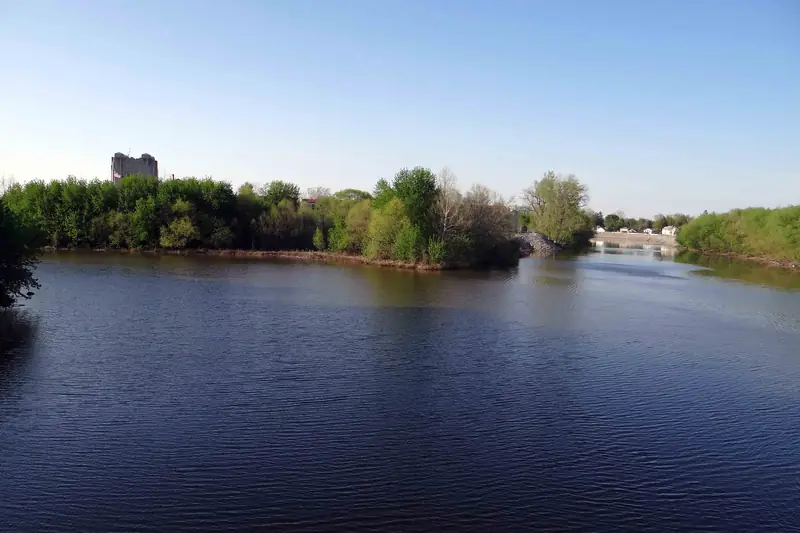
Asked most often
 Is Fort Wayne Water Hard?Tap water
 Does My House Have a Lead Service Line?Tap water
 Do I Need a Sump Pump Backup?Basements and sewers
 Do I Need a Water Softener in Fort Wayne?Softeners and filters
 How Do I Keep Pipes From Freezing?Winter, pipes and heaters
 How Often Should I Test My Well?Wells
 Who Fixes a Sewer Backup in Fort Wayne?Basements and sewers
 Is There PFAS in Fort Wayne Water?Tap water
Five topics, 27 questions
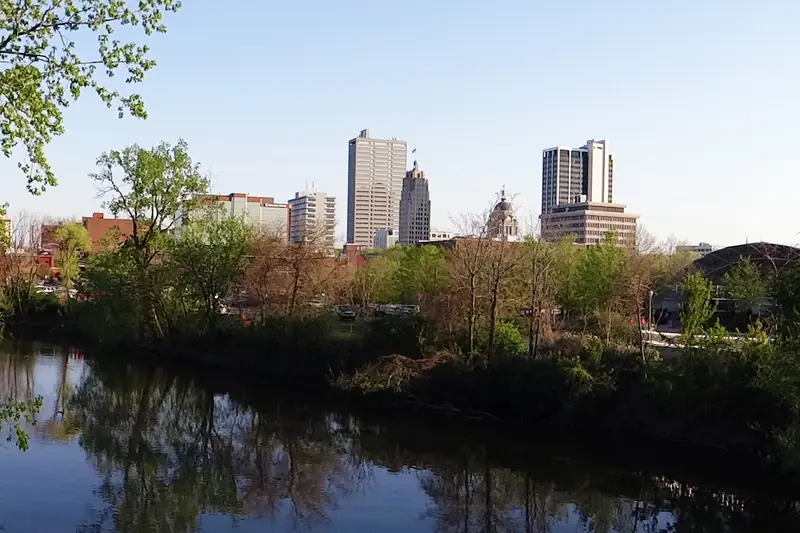
Tap water
What comes out of a Fort Wayne tap, from the St. Joseph River to lead service lines.
- Is Fort Wayne Water Hard?
- Where Does Fort Wayne Tap Water Come From?
- Why Does My Tap Water Taste Earthy?
- How Do I Read the Fort Wayne Water Quality Report?
- Is There PFAS in Fort Wayne Water?
- Does My House Have a Lead Service Line?
- How Does Fort Wayne Lead Line Replacement Work?
Softeners and filters
When treatment helps on city or well water, and what a certification has to say.
- Do I Need a Water Softener in Fort Wayne?
- What Size Water Softener Do I Need?
- Is a Salt-Free Water Conditioner Worth It?
- Should I Filter Chlorine From Fort Wayne Water?
- Which Filters Reduce Lead in Drinking Water?
- Is Reverse Osmosis Worth It for Drinking Water?
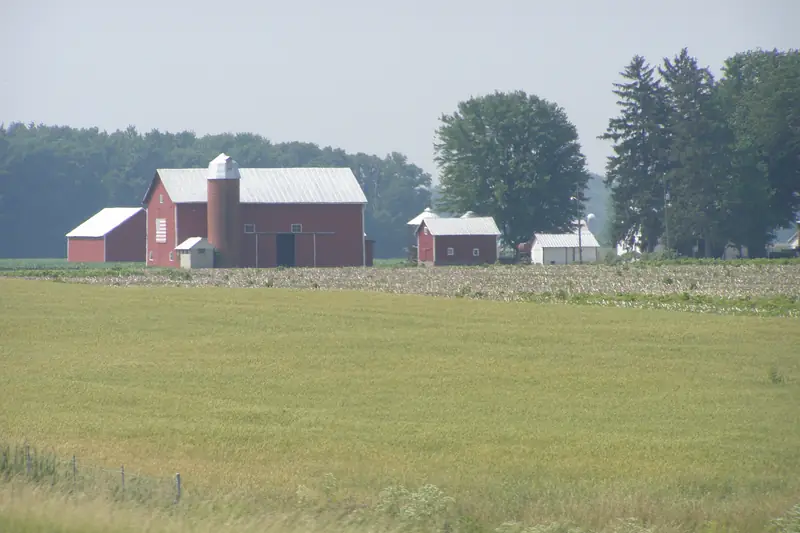
Wells
Testing, smells, iron and arsenic for Allen County's private wells.
- How Often Should I Test My Well?
- Why Does My Well Water Smell Like Rotten Eggs?
- What Well Water Treatment Do I Need?
- Is There Arsenic in Allen County Well Water?
Basements and sewers
Wet basements, sump pumps, backups and the combined sewer system.
- Why Does My Basement Flood When It Rains?
- Do I Need a Sump Pump Backup?
- Can My Sump Pump Drain Into the Sewer?
- Do I Need a Backwater Valve?
- Who Fixes a Sewer Backup in Fort Wayne?
- What Is a Combined Sewer Overflow?
Winter, pipes and heaters
Freezes, sprinkler backflow tests, water heaters and doing your own plumbing.
- How Do I Keep Pipes From Freezing?
- Does My Lawn Sprinkler Need a Backflow Test?
- How Long Does a Water Heater Last?
- Can I Do My Own Plumbing in Indiana?
The short version
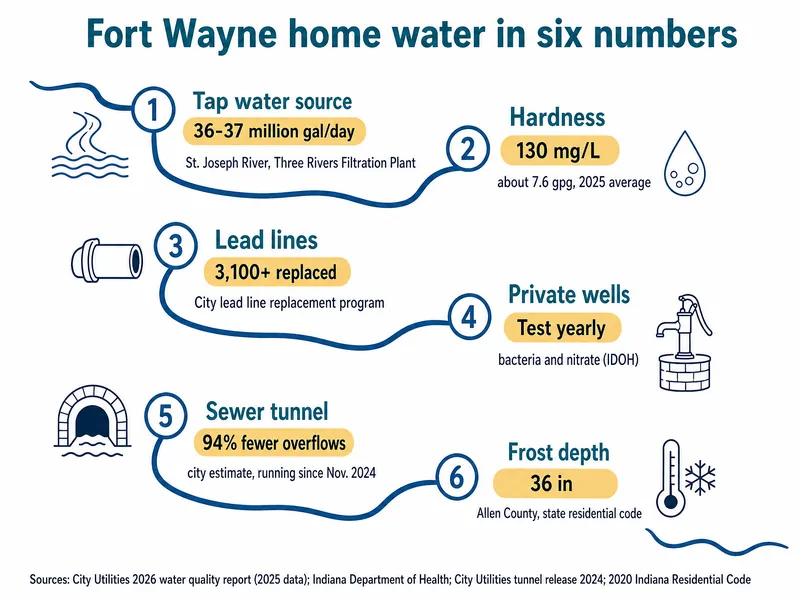
- Fort Wayne's tap water is St. Joseph River water, averaging 130 mg/L of hardness (about 7.6 gpg) in 2025, according to City Utilities' 2026 water quality report.
- More than 3,100 lead service lines have been replaced through the city's program; the line from the curb stop to the house belongs to the owner.
- Private wells are not regulated by IDEM or EPA, and the Indiana Department of Health says to test yearly for bacteria and nitrate.
- No sump pump, downspout or yard drain may connect to a sanitary sewer under City Utilities' 2026 wastewater rules.
- Fort Wayne's January averages a high of 32.6°F and a low of 18.4°F (NOAA 1991–2020 normals), and the state code puts Allen County's frost depth at 36 inches.
Three Rivers Home Water answers the questions Fort Wayne and Allen County homeowners ask about the water in their houses: what comes out of the tap, what to do about a well, why basements flood and how to get through a cold snap. It is run separately from Fort Wayne City Utilities and the city's Three Rivers Filtration Plant, and it is not a plumber or a public agency. Every answer names the report or rule it comes from.
Fort Wayne home water in numbers
- 130 mg/LCity tap water hardness, 2025 averageSource: City Utilities 2026 water quality report
- $10State lab price for a well bacteria test (plus shipping)Source: Indiana Department of Health
- 94%Cut in combined sewer overflows the city expects from its tunnelSource: City Utilities, November 2024
- 123.6Nights a year at or below 32°F at Fort Wayne airportSource: NOAA NCEI 1991–2020 normals
What is in Fort Wayne tap water?
Fort Wayne tap water is treated St. Joseph River water that met every federal limit in 2025, according to City Utilities' yearly report. The plant softens it with lime, takes out taste and odor with powdered activated carbon, disinfects it with free chlorine plus chlorine dioxide, and finishes with UV light.
The numbers most people look for: hardness averaged 130 mg/L, chlorine peaked at 2.10 ppm against a 4 ppm limit, nitrate peaked at 4.774 ppm against 10, and none of the six PFAS regulated in 2024 was detected. In the report, a ppm is a milligram per liter and a ppb is a microgram per liter. Start with where Fort Wayne tap water comes from, then how to read the yearly water report and whether there is PFAS in the city's water. If the water tastes musty in warm weather, why tap water can taste earthy explains it. Every question on city water is gathered under tap water.
Does Fort Wayne have lead service lines?
Yes, some older homes still do, though the city's plant water and mains are lead-free. City Utilities says private lead lines are the homeowner's responsibility, its lead line page caps the owner's share at $2,600 in project areas ($3,500 base cost elsewhere), and its brochure says homes built before 1937 are likely, and those built before 1981 may, have one.
In 2025 the lead 90th percentile was 4.26 ppb in the first round, with 3 of 106 homes over the 15 ppb action level, and 2.61 ppb in the second, with none over. EPA's new rule lowers the action level to 10 µg/L on November 1, 2027. Read how to tell if a house has a lead line, how Fort Wayne lead line replacement works and which filters reduce lead.
| Part of the system | Owner | Source |
|---|---|---|
| Water main to and including the curb stop | City Utilities | City water rules (2022) |
| Curb stop to the house, and the meter's care | Property owner | City water rules; cold-weather page |
| Building sewer from the house to the public sewer | Property owner | City wastewater rules (2026) |
| Private well and its pump | Well owner; not regulated by IDEM or EPA | Indiana Department of Health |
| Lawn sprinkler backflow device, tested yearly | Property owner | City backflow page |
Do Fort Wayne homes need a softener?
On city water, a softener is a comfort choice rather than a need, while most well owners will want one after a test. Purdue Extension says water over 180 ppm should be softened; the city's 2025 maximum was 174 mg/L, but Purdue says "virtually all" Indiana groundwater is over 180 ppm.
Fort Wayne water is "hard" on the USGS scale, so scale on faucets and in water heaters is normal. The questions to read are is Fort Wayne water hard, whether a Fort Wayne home needs a softener, how to size one, whether a salt-free conditioner is worth it, whether to filter chlorine and whether reverse osmosis is worth it. The full set is under softeners and filters.
What should Allen County well owners test for?
Allen County well owners should test every year for bacteria and nitrate, and at least every 5 years for fluoride, arsenic, lead and copper, the Indiana Department of Health says. Its state lab charges $10 each for bacteria, nitrate and fluoride and $20 for arsenic, lead and copper, plus shipping. EPA adds total dissolved solids and pH to the yearly list, and says to test right away after flooding, well repairs or a change in taste, odor or color.
Arsenic is the one to take seriously: a USGS study found at least 10 µg/L, the federal limit, in 9% of more than 800 northern glacial-aquifer wells. Hydrogen sulfide and iron are common nuisances in northeast Indiana. Read how often to test your well, whether there is arsenic in Allen County well water, why well water smells like rotten eggs and what well water treatment you need, all collected under wells.
Why do Fort Wayne basements flood?
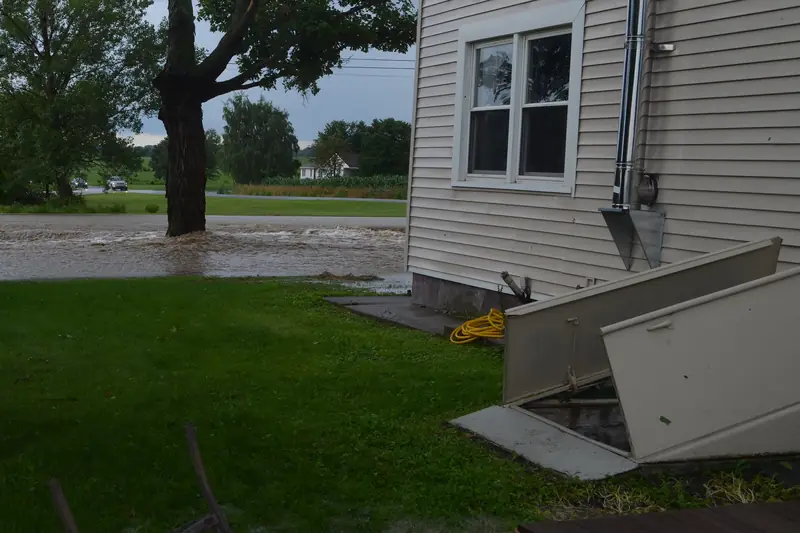
Fort Wayne basements flood from three directions: groundwater pushing up through the floor, surface water running in, and sewer water backing up through floor drains. About a third of the city is served by combined sewers, which carry rain and sewage in one pipe, according to City Utilities.
The building sewer between your house and the public sewer is yours, and the city's 2026 rules say it has "no responsibility" for it. Its tunnel, fully running since November 14, 2024, is expected to cut overflows to the rivers by 94%. FEMA's urban flooding guide says homeowners insurance "may not cover sewer backup", so ask your insurer about a sewer or drain backup endorsement. Start with why your basement floods when it rains, then whether you need a sump pump backup, whether you need a backwater valve, whether your sump pump can drain into the sewer, who fixes a sewer backup and what a combined sewer overflow is. The topic page is basements and sewers.
How cold does a Fort Wayne winter get?
Cold enough to freeze an exposed pipe most winters: NOAA's 1991–2020 normals for Fort Wayne International Airport show 27.5 January nights at or below 32°F and 6.2 nights a year at or below 0°F. The record low is −24°F, set January 12, 1918, per the National Weather Service.
The state residential code sets Allen County's frost depth at 36 inches and wants water service pipe at least 12 inches deep and 6 inches below the frost line. The meter is the owner's to protect; City Utilities says replacement fees start at $130 and it does not thaw service pipes. Read how to keep pipes from freezing, how long a water heater lasts, whether your lawn sprinkler needs a backflow test and whether you can do your own plumbing in Indiana, all under winter pipes and water heaters.
How this answer was put together
These answers rest on Fort Wayne City Utilities' published reports and rules (the 2026 water quality report on 2025 data, the 2022 water rules and the October 2026 wastewater rules), its web pages on lead lines, sewers, cold weather and backflow, Indiana Department of Health well guidance, EPA and USGS publications, FEMA insurance pages, NOAA NCEI climate normals and the 2020 Indiana Residential Code, all read in October 2026. Prices, rankings and recommendations for contractors or companies are left out, and so are local permit details that could not be confirmed.
Follow-up questions
Is Three Rivers Home Water part of City Utilities?
No. It is run separately from Fort Wayne City Utilities and the Three Rivers Filtration Plant. For service problems, City Utilities takes calls through 311.
Does this site cover New Haven and Huntertown?
Partly. New Haven buys treated surface water and Huntertown uses wells; both publish their own yearly reports, and the tap water pages note where their numbers differ from Fort Wayne's.
Where can I get my well water tested in Allen County?
The Indiana Department of Health lab tests private wells for a fee, and the state keeps a list of certified drinking water labs. No Allen County well-testing program was found.
Who do I call when my water service freezes?
Start with your own plumbing; City Utilities says owners must try to find and thaw the freeze first and that it does not thaw service pipes. If neighbors are also without water, report it through 311.
Can I do my own plumbing in Fort Wayne?
Indiana's plumbing license law does not apply to an owner-occupant working on a home of eight or fewer units. Codes still apply, so check with the building department before you start.
How often does the city publish its water report?
Once a year, each June, covering the previous calendar year. Federal rules require delivery by July 1.